
Introduction
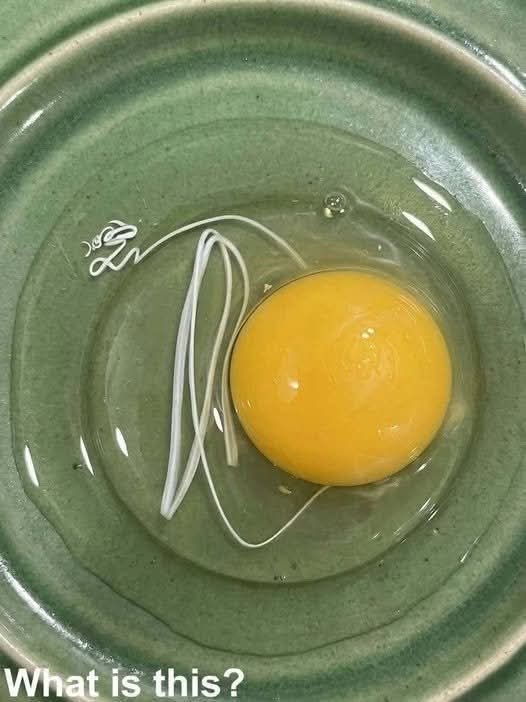
Cracking an egg and spotting a white, ribbon-like strand beside the yolk can be unsettling if you don’t know what it is. Many people assume the worst — that the egg is spoiled or contaminated — but that string is a normal part of the egg’s anatomy. Known as the chalaza (plural: chalazae), this structure helps keep the yolk centered and protected. Far from being a defect, the chalaza is a sign of a properly formed egg and often indicates freshness.
What Exactly Is the Chalaza?
The chalaza is a twisted cord of thick egg white (albumen) made primarily of protein. It forms during the egg’s development inside the hen’s oviduct. As layers of albumen are deposited around the yolk, two rope-like strands twist and anchor the yolk to the inner shell membrane. These strands act like suspension cables, keeping the yolk centered so it doesn’t bump against the shell or break during movement.
Every egg typically has two chalazae, one on each side of the yolk, though one may be more visible than the other. In very fresh eggs the chalazae are firm and prominent; as the egg ages they become less noticeable and eventually dissolve into the surrounding egg white.
Is the Chalaza Safe to Eat?
Yes. The chalaza is entirely edible and harmless. It is composed of the same proteins found in the rest of the egg white and does not indicate contamination, parasites, or spoilage. In fact, chefs and bakers often view a pronounced chalaza as a sign of a fresh, high-quality egg. If the appearance bothers you, it can be removed easily with a spoon or fork before cooking, but leaving it in will not affect flavor, safety, or nutritional value.
Common Misconceptions and Myths
- Not an embryo: The chalaza is unrelated to fertilization or chick development; it is structural, not reproductive.
- Not a worm or parasite: Despite its string-like look, it is simply a protein strand and not a living organism.
- Not a sign of spoilage: Spoiled eggs usually have an off smell, discolored whites or yolks, or an unusual texture — not a visible chalaza.
How the Chalaza Affects Cooking
In most everyday cooking, the chalaza is inconsequential. When frying, scrambling, or making omelets, it blends into the egg white and is barely noticeable. In delicate preparations such as custards, meringues, or silky sauces, some cooks prefer to remove the chalaza to ensure an ultra-smooth texture. For baking, many recipes call for straining beaten eggs to remove chalazae and any bits of shell for a finer result.
Tips for Handling and Storage
- Check freshness: A prominent chalaza usually means the egg is fresh. If you’re unsure about an egg’s freshness, perform a simple water test: place the egg in a bowl of cold water — fresh eggs sink and lie flat, older eggs may tilt or float.
- Smell test: If an egg smells sulfurous or rotten when cracked, discard it regardless of chalaza presence.
- Remove if desired: Use a spoon, small knife, or fine strainer to lift out the chalaza when preparing very smooth dishes.
- Store properly: Keep eggs refrigerated to preserve freshness and slow the breakdown of the chalaza and other egg structures.
When to Discard an Egg
The chalaza alone is not a reason to throw an egg away. Discard eggs only if they emit a foul odor, show unusual discoloration, or have a watery, off texture. If the yolk is broken and the egg white is cloudy or slimy in an abnormal way, it’s safer to err on the side of caution and discard the egg.
Conclusion
That white ribbon-like thing in your egg is the chalaza — a natural, protein-based structure that helps keep the yolk centered. It’s harmless, edible, and often a sign of freshness. Whether you leave it in or remove it for aesthetic reasons, there’s no health risk associated with it. Understanding what the chalaza is can turn an initially off-putting discovery into a small reassurance about the quality of the egg in your hand.Quick tip: If the chalaza bothers you when baking, crack eggs into a fine mesh strainer and let the liquid pass through — the chalaza and any shell fragments will be caught.