
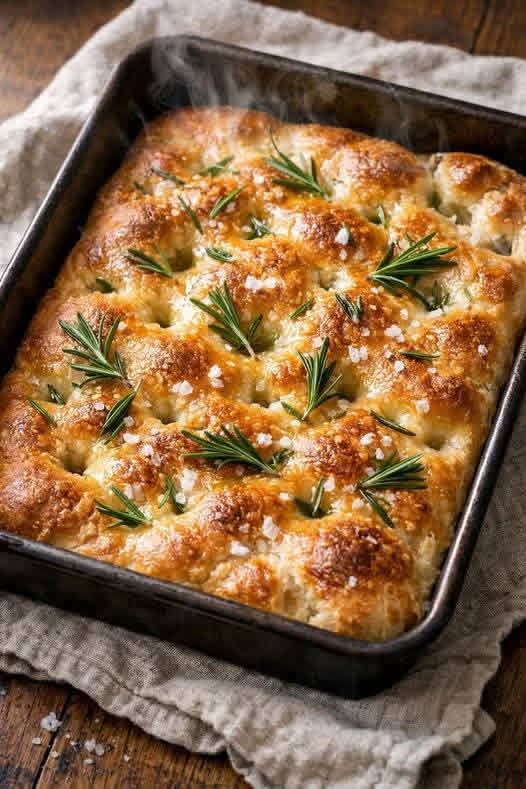
Sourdough Focaccia with Olive Oil and Herbs is a soft, airy, and deeply flavorful flatbread with a crisp golden crust and a fluffy, olive oil–rich interior. It’s one of the most forgiving sourdough recipes because it doesn’t require complex shaping, yet it delivers bakery-level results with minimal effort. The long fermentation gives it a complex flavor, while generous olive oil creates that signature dimpled, glossy surface.
This focaccia is perfect as a side for soups and pasta, used for sandwiches, or simply enjoyed warm with a drizzle of olive oil and sea salt.
ngredients:
- 500g bread flour (or strong all-purpose flour)
- 400g water (room temperature)
- 100g active sourdough starter (bubbly and fed)
- 10g salt
- 2–3 tablespoons extra virgin olive oil (for dough)
- 3–4 tablespoons extra virgin olive oil (for pan and topping)
Toppings:
- 1–2 teaspoons flaky sea salt
- 1 tablespoon fresh rosemary (or thyme, oregano, mixed herbs)
- Optional: sliced garlic, cherry tomatoes, olives, caramelized onions
Step 1: Mixing the Dough
In a large bowl, combine 500g flour and 400g water. Mix until no dry flour remains. The dough will be very sticky and loose—this is correct for focaccia. Cover and let it rest for 30–45 minutes. This resting stage allows the flour to fully hydrate and improves gluten formation.
After resting, add 100g active sourdough starter and 10g salt. Mix thoroughly until fully incorporated. The dough will still feel wet and sticky, but smoother than before.
Now drizzle in 2–3 tablespoons of olive oil and gently fold it into the dough. This enriches the dough and contributes to its soft, airy texture.
Step 2: Bulk Fermentation (First Rise)
Cover the bowl and let the dough ferment at room temperature for 4–6 hours, depending on your kitchen temperature.
During the first 2 hours, perform stretch and folds every 30 minutes. To do this, wet your hands slightly, grab one side of the dough, stretch it upward, and fold it over itself. Rotate the bowl and repeat on all sides. Do this 3–4 times per session.
As fermentation progresses, the dough will become smoother, more elastic, and slightly bubbly. It should increase in volume and feel lighter.
Step 3: Preparing the Pan
Generously coat a baking tray or rectangular pan (about 9×13 inches) with 2–3 tablespoons of olive oil. Do not be shy with the oil—this is what creates the crispy, golden bottom.
Once bulk fermentation is complete, gently transfer the dough into the oiled pan. Try not to deflate it too much.
Step 4: Final Proof in Pan
Cover the pan with a lid, plastic wrap, or a damp towel. Let the dough rest for 2–4 hours at room temperature, or until it becomes visibly puffy and spreads naturally across the pan.
If you prefer deeper flavor, you can refrigerate it overnight (8–12 hours) and bring it back to room temperature before baking.
The dough is ready when it looks airy, jiggly, and has nearly doubled in height.
Step 5: Dimpling and Topping
Preheat your oven to 220°C (430°F).
Before baking, drizzle another tablespoon of olive oil over the surface of the dough. Then, using your fingertips, gently press down into the dough to create deep dimples. This signature step helps trap olive oil and creates focaccia’s iconic texture.
Sprinkle flaky sea salt evenly across the surface. Add rosemary or your chosen herbs. You can also press in toppings like cherry tomatoes, olives, or thin garlic slices.
Step 6: Baking the Focaccia
Place the pan in the preheated oven and bake for 25–30 minutes, or until the top is golden brown and crisp. The edges should be deeply caramelized, and the surface should look glossy from the olive oil.
For extra crispiness, you can bake for an additional 3–5 minutes, watching carefully to avoid burning.
Step 7: Cooling
Remove the focaccia from the oven and let it cool in the pan for about 10 minutes. Then transfer it to a wire rack. Cooling helps the interior set while keeping the crust crisp.
For best texture, allow it to cool slightly before slicing, but it is also delicious warm.
Tips for Perfect Sourdough Focaccia:
- Use plenty of olive oil—it defines the flavor and texture.
- Keep the dough wet and sticky; do not over-flour it.
- Be gentle when handling to preserve air bubbles.
- Longer fermentation improves flavor and chewiness.
- Dimpling deeply helps create signature pockets for oil and herbs.
Serving Ideas:
Sourdough focaccia is incredibly versatile. Serve it warm with olive oil and balsamic vinegar, use it for sandwiches, or pair it with soups and salads. It also makes excellent picnic bread or an appetizer with dips like hummus or pesto.
Sourdough Focaccia with Olive Oil and Herbs is a simple yet deeply satisfying bake. With its crisp edges, airy crumb, and rich olive oil flavor, it’s a bread that feels both rustic and luxurious at the same time.