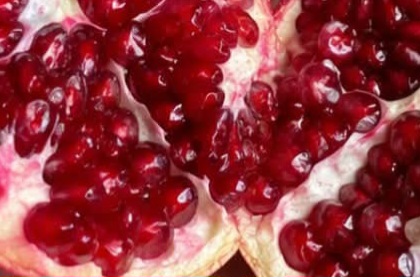
The Plaque Lock Starts CrackingPomegranate juice hits first. Not the sugary candy version — the deep red juice with that sharp, mouth-puckering bite that stains the tongue and leaves a tart burn in the throat. Inside the body, that acidity isn’t the point; the polyphenols are. They act like molecular brooms, sweeping down the oxidation that turns LDL into plaque-building sludge.Oxidized LDL is the spark that lights the fire. Once it’s damaged, the immune system treats it like debris and stacks more material on top, layer after layer, until the artery wall starts behaving like a clogged drain. Pomegranate doesn’t just slow that process. It slams the brakes on oxidation and helps HDL act like a delivery truck hauling cholesterol back out of the vessel wall.That’s why the same blood test can look “unchanged,” while the artery itself starts breathing again. The number on the paper stays stubborn. The wall inside the vessel starts losing its armor.And that’s the part the drug-only crowd hates talking about. Wall Street doesn’t build empires around a glass of juice from a fruit most people ignore in the produce aisle. No logo. No blockbuster patent. Just a red liquid doing work that sounds too simple to matter — until the scan tells a different story.But pomegranate is only attacking the surface layer of the problem. Underneath that crust is something stranger, and that’s where the second food comes in.The Fibrin Web Gets Ripped ApartNattokinase works like a demolition crew inside a rusted tunnel. Plaque doesn’t just sit there; it anchors itself in a fibrin network, a kind of biological scaffolding that gives the buildup something to cling to. Nattokinase cuts that web apart, and once the net weakens, the cholesterol mass can collapse and clear more easily.That’s why natto — the fermented bean food with its sticky, stringy texture and sharp, funky smell — has such a strange reputation. It looks like something most people would push away from the plate. But inside the body, that fermented force is doing the opposite of what your eyes expect: it’s breaking the glue that helps plaque stay alive.Here’s the ugly contrast. Without that fibrin breakdown, plaque keeps acting like barnacles on a ship hull. Blood keeps slamming past it, the vessel keeps getting angrier, and the whole system keeps stiffening. With nattokinase in the picture, the scaffold starts to fail. The buildup loses its grip.And that’s not a theory pulled out of thin air. That’s a mechanism you can picture: web, collapse, cleanup. Web, collapse, cleanup. The first thing people notice is not some magical overnight transformation. It’s the pressure changing. The system stops feeling like it’s fighting itself.But there’s a catch most people miss, and it decides whether this works like a hammer or fizzles into background noise.Why Some Arteries Clear and Others Stay StuckThe body doesn’t reverse plaque just because you threw a useful food at it once or twice. It reverses when the chemistry, the timing, and the environment all line up. Think of it like trying to drain a flooded basement with a hose while the faucet is still blasting upstairs — unless the source of the flood is addressed, the cleanup never catches up.That’s why the people who get results don’t treat pomegranate juice or nattokinase like decoration. They use them as pressure tools. One knocks down oxidation, one breaks the fibrin cage, and together they create the conditions for the artery wall to stop acting like a construction site.That is the difference between “slower damage” and actual reversal. One keeps the fire from spreading. The other starts pulling smoke out of the room.The recognition hits hard for anyone who has seen a scan and felt that cold little drop in the stomach. The numbers are abstract until you realize they represent a living tunnel carrying every ounce of blood your heart depends on. Then anger shows up: why was the conversation always about one lab value, one drug, one narrow lever?Because that’s easier to sell. It’s not because the body is simple. It’s because the body is profitable when the story is kept small.Here’s the relief: plaque is not a one-way sentence. The vessel wall can change. The chemistry can shift. The sticky crust can be attacked from more than one direction, and that matters for people who feel like their arteries have already written the ending. They haven’t.And the next detail is the one that decides whether you’re helping the process or quietly sabotaging it without realizing it…The Small Habit That Can Kill the ResultThe wrong pairing can blunt the whole effect. A sugar-heavy “juice,” a random low-dose supplement, or a meal that keeps flooding the bloodstream with inflammatory fuel turns the whole thing muddy and slow. You can almost see it: a bright red glass sitting next to a plate that keeps the fire burning, while the vessel wall stays coated in greasy residue.The fix is not complicated, but it is exact. The pomegranate has to be the real thing, not a dessert in disguise. The nattokinase has to be used with respect for dose and consistency, because the body does not remodel plaque on wishful thinking.And there’s one more twist: timing and combination matter more than most people realize. Get that wrong, and you’re just pouring expensive ingredients into a system that never gets the signal to change.The next question is the one almost nobody asks: what has to be removed first so these two actually have something to work on?This article is for informational purposes only and does not replace professional medical advice. Please consult your healthcare provider for personalized guidance.
2 Foods That Can Attack Arterial Plaque Faster Than Statins